
Thread is a core component for mechanical connection and transmission, widely adopted in various mechanical equipment and structural parts. It converts rotary motion into linear motion to achieve component fastening and power transmission. Threads fall into diverse categories based on different classification criteria, each possessing distinct properties and applicable scenarios.
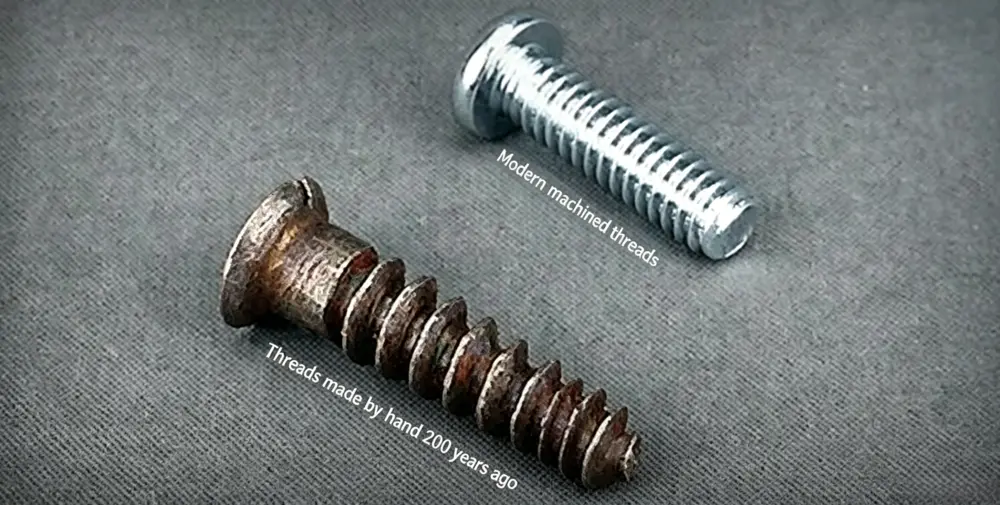
1. Basic Classification of Threads
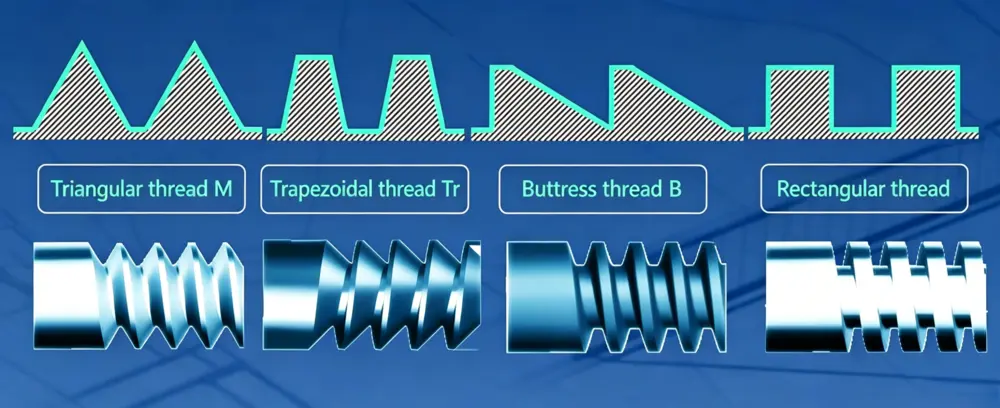
1.1 Classification by Thread Profile
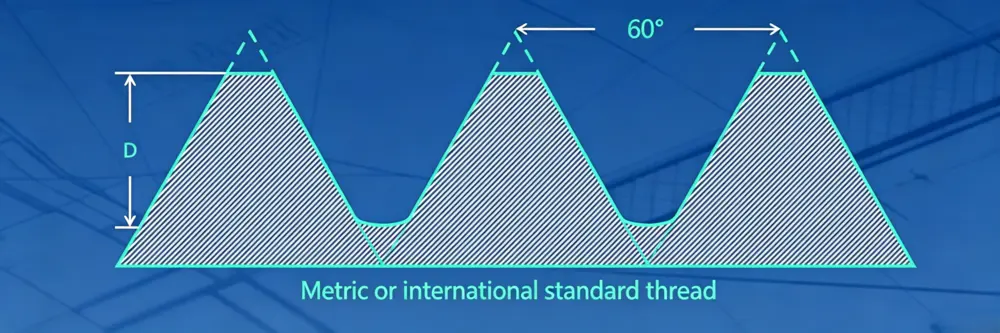
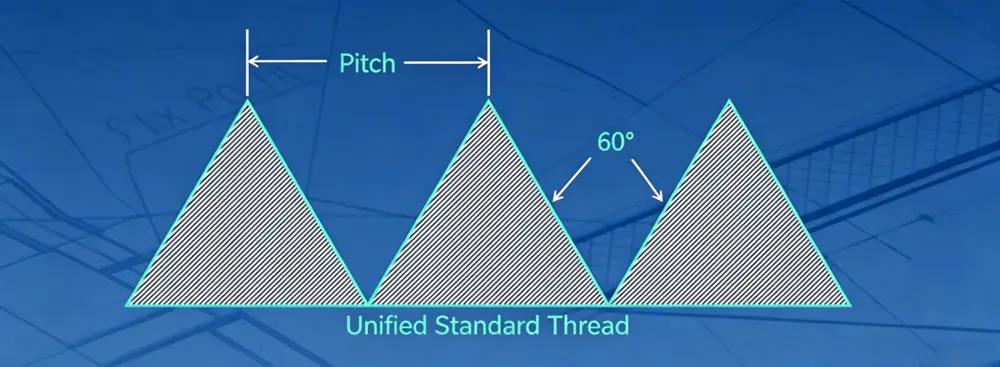
- Triangular Thread: Primarily used for fastening connections such as bolts and nuts, a common type conforming to Chinese national standards. It features flat crests and rounded roots with a 60° profile angle, easy for lathe machining.
- Trapezoidal Thread: Also known as Acme thread, designed for power transmission and commonly applied to lathe lead screws. Worn clearance can be compensated via nut adjustment, delivering high transmission efficiency.
- Buttress Thread: Applied to one-way power transmission, widely used in screw jacks, pressing machines and similar equipment.
- Square Thread: Less commonly used yet functional for special industrial occasions.
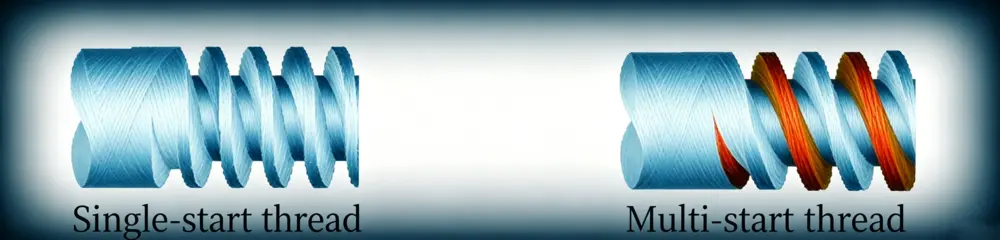
1.2 Classification by Number of Helices
- Single-start Thread: Formed by a single helix, simple in structure and extensively utilized.
- Multi-start Thread: Consists of two or more helices, boosting transmission efficiency with relatively complex processing requirements.
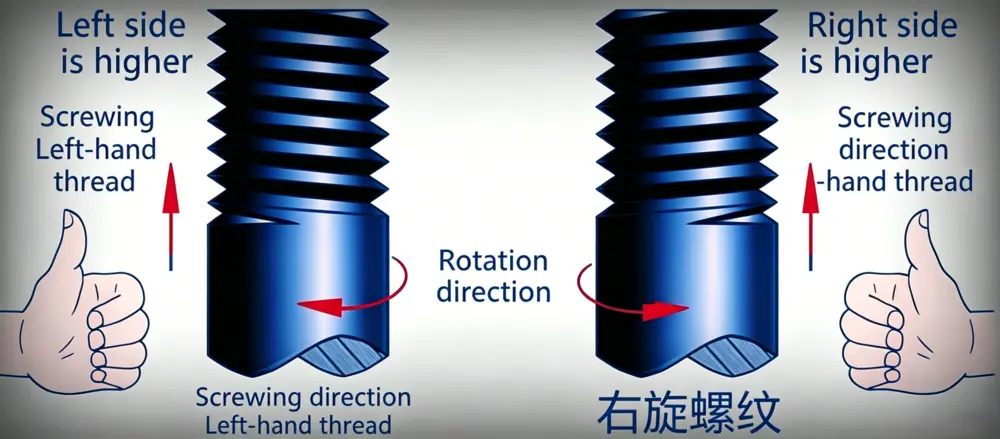
1.3 Classification by Rotation Direction
- Right-hand Thread: Screws in clockwise rotation, the most mainstream thread direction.
- Left-hand Thread: Screws in counterclockwise rotation, rarely used and reserved for special working conditions.
1.4 Classification by Base Shape
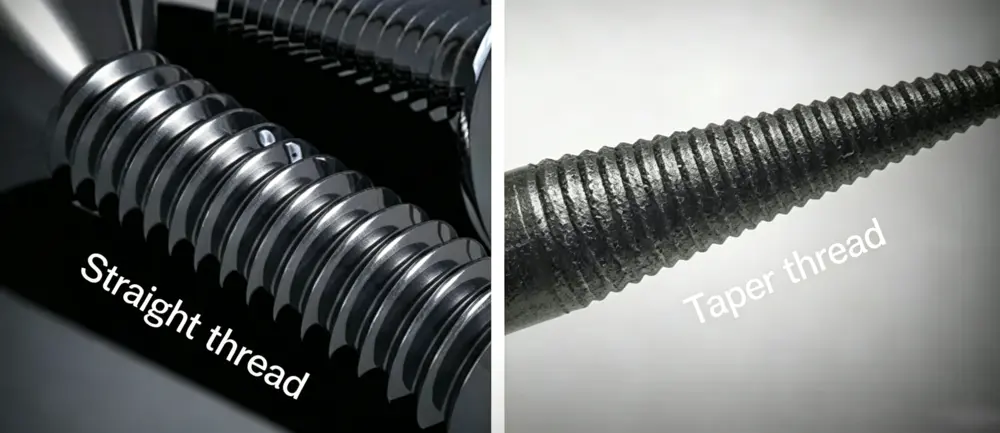
- Cylindrical Thread: The most prevalent form applicable to general connection and transmission.
- Tapered Thread: Manufactured with a 1:16 taper, mainly used for pipeline joint sealing to avoid fluid leakage.
2. Application Fields of Threads
2.1 Fastening Threads
Serving as the foundation of bolts, nuts and other fasteners, internal and external thread matching realizes stable assembly of mechanical parts.
2.2 Transmission Threads
Convey power and linear movement through rotational operation, commonly equipped on lathes, lead screws and other transmission mechanisms.
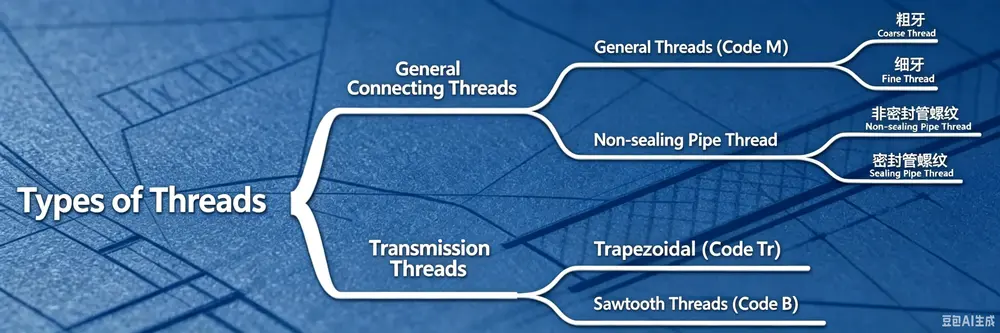
2.3 Pipe Threads
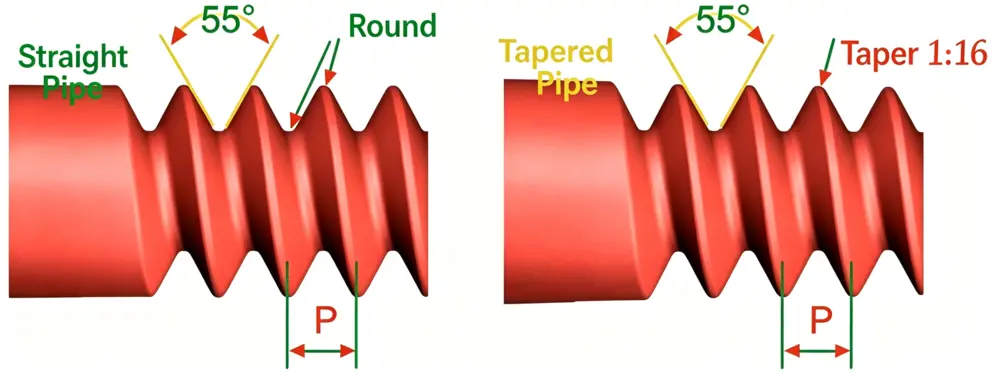
Specially designed for pipeline connection with tight thread fit, divided into straight pipe thread and tapered pipe thread. It adopts a 55° thread angle, marked as PS and NPS for straight pipe threads; NPT tapered threads feature a 60° angle and 1:16 taper ratio.
3. International Thread Standards
Countries have formulated independent thread standards catering to domestic industrial demands. Major international specifications include metric thread, American standard thread, unified thread and Whitworth thread. These standards define core parameters such as thread profile, nominal diameter, pitch and rotation direction, guaranteeing interchangeability and universal compatibility worldwide.
Summary
Metric, American and British standard threads all play an irreplaceable role in modern machinery engineering thanks to precise classification and targeted performance. With technological advancement, thread manufacturing technology will keep upgrading to drive innovation and efficiency improvement in mechanical engineering.