
In demanding industrial environments, the long-term corrosion resistance and material stability of control valve rust are critical for ensuring uninterrupted production. In a specific case, a chemical plant experienced abnormal corrosion in an electric ball valve made of CF8M (nickel-chromium austenitic stainless steel) shortly after installation, compromising system stability. The GRAT technical team conducted a systematic failure analysis and developed this solution for the valve.
Technical Specifications
- Product Name: Electric Control Ball Valve
- Medium: Weak Acidic Process Water (Chloride Ion < 100ppm)
- Temperature: 80-90°C
- Pressure: 1.0 MPa
- Voltage: 380V AC
- Seal: PTFE Soft Seal
- Body Material: CF8M (ASTM A351)
- Connection Type: Flanged
- Operation: Proportional Control
- Control Signal: 4-20mA
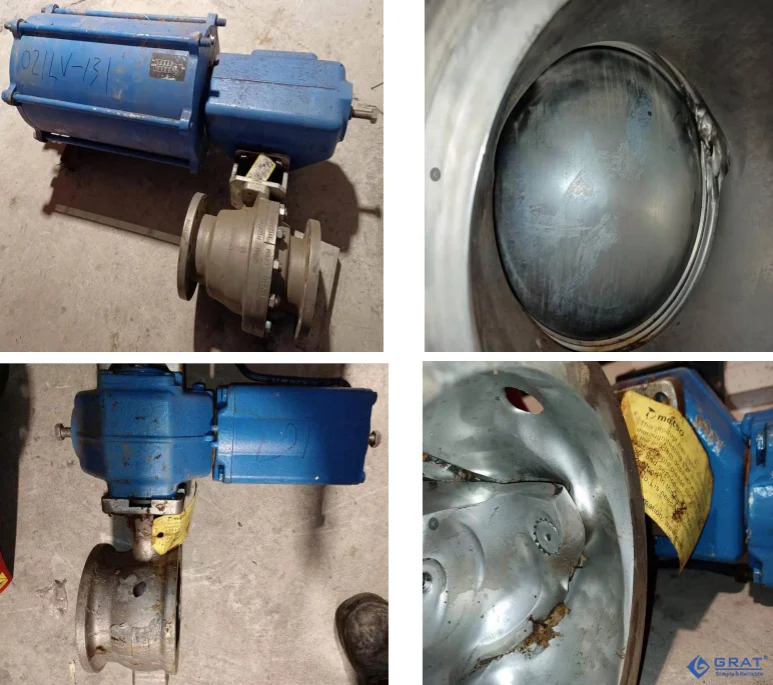
Failure Phenomenon: The stainless steel valve passed basic inspections before installation, and pipeline pressure tests met design requirements. However, after several months of operation, noticeable brown rust spots appeared on the external valve body and flange neck, while the internal sealing surface remained intact.
Troubleshooting & Analysis
The GRAT technical team performed a systematic inspection and analysis of the failed stainless steel valve rust, including:
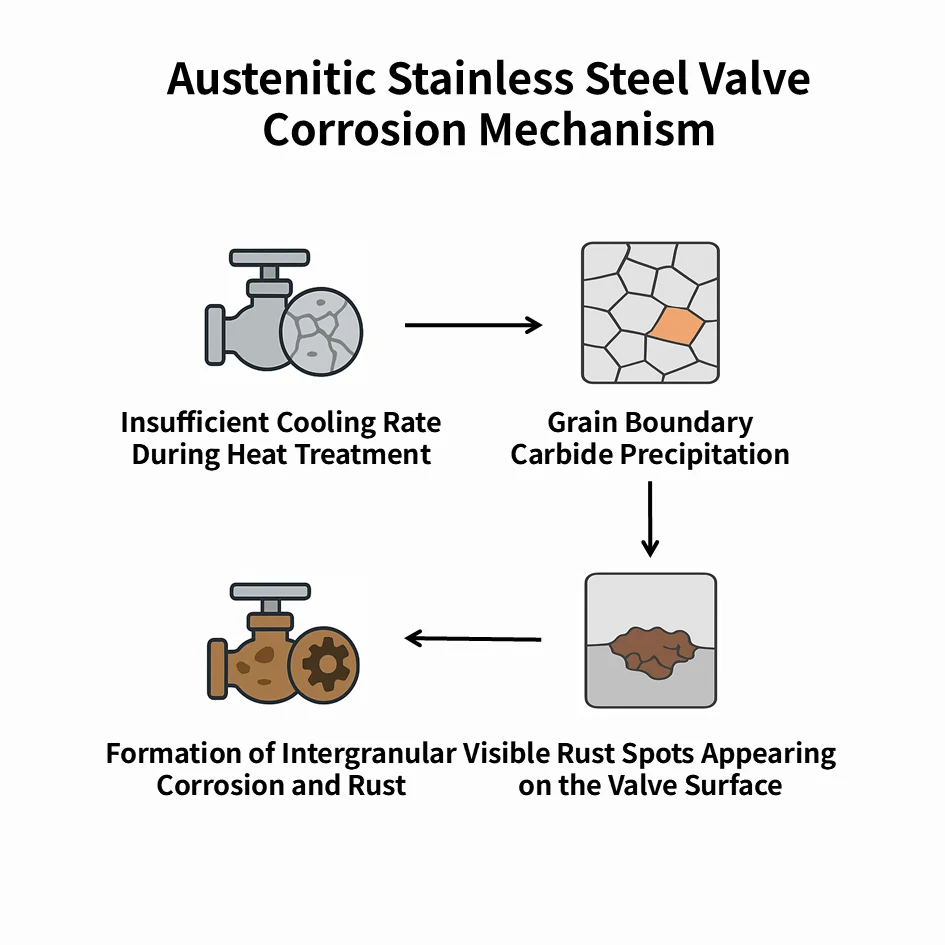
- Macroscopic Inspection: Corrosion was concentrated at the grain boundary areas of the valve body.
- Microscopic Examination: Analysis via metallography, SEM, and EDS revealed continuous network-like precipitates at the grain boundaries.
- Heat Treatment Verification: Comparing solution-annealed and slowly cooled samples confirmed the precipitates as M₂₃C₆-type chromium carbides.
Root Cause Analysis:
- Heat treatment process control
- Welding parameters and cooling rates
- Media compatibility and chloride content
Solution & Implementation
The core solution involves optimizing the entire process from casting to machining to ensure a uniform and stable austenitic microstructure in the stainless steel valve rust material.
- Process Optimization:
- Strictly adhere to solution heat treatment specifications: heat components to 1050-1150°C with sufficient holding time
- Implement rapid cooling techniques like water quenching to suppress carbide reprecipitation
- Field Maintenance Improvements:
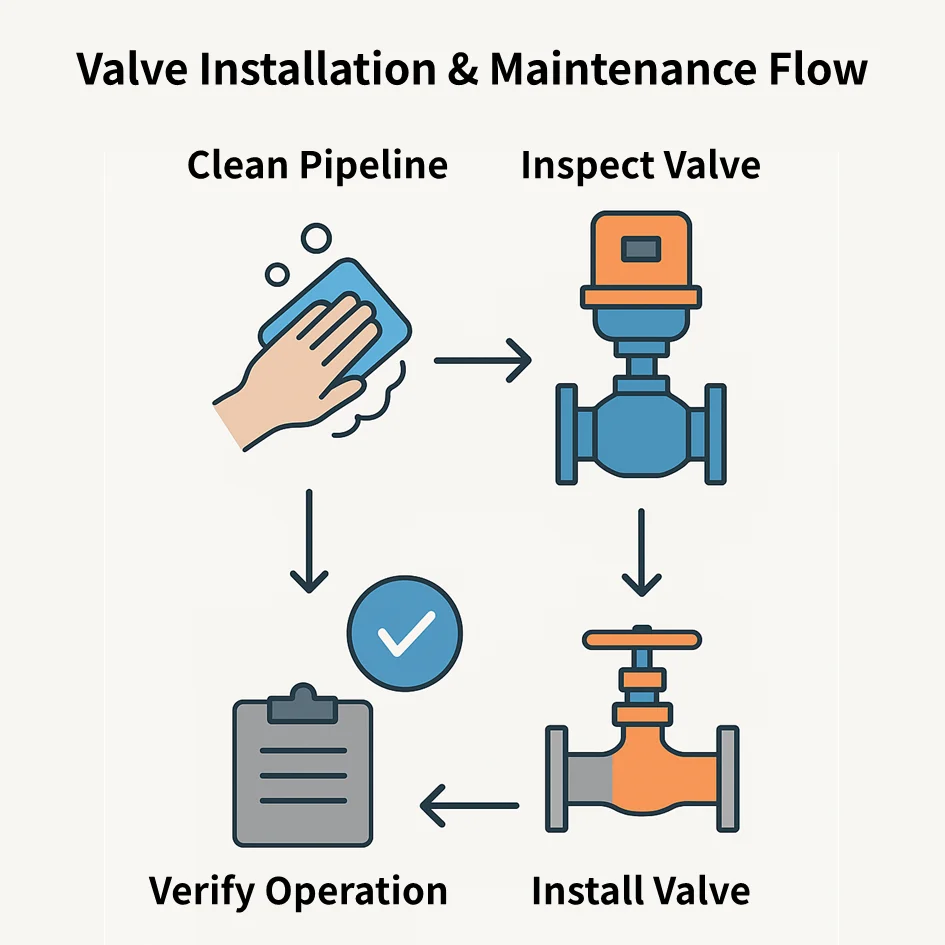
- Thoroughly clean pipelines before installation to eliminate potential damage from contaminants
- Install valves with actuators vertically, ensuring proper alignment
- Perform regular operational tests to verify sealing surface integrity
- Implementation Results
- After process optimization, the CF8M stainless steel ball valve has operated continuously for 18 months without any signs of corrosion
- The overall failure rate has decreased dramatically by 95% compared to pre-improvement levels
- This case has become a benchmark practice in corrosion prevention technology for austenitic stainless steel valves
Experience Summary
Through in-depth failure analysis, GRAT identified improper solution heat treatment as the root cause of grain boundary carbide precipitation in the austenitic stainless steel control valve. By upgrading heat treatment equipment and establishing stricter process disciplines, we have eliminated such quality defects at the source.
Choosing GRAT means you receive not only a reliable stainless steel valve product but a comprehensive fluid handling solution based on deep technical expertise and rigorous process control. We are committed to ensuring the long-term, stable operation of your process industrial plants with superior quality control and professional technical service.