
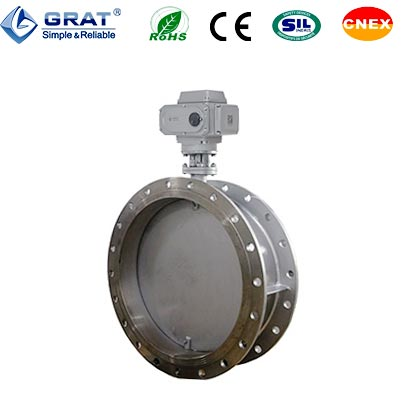
For high‑temperature dust‑laden ventilation and dust‑removal ducts in metallurgy, cement plants and power stations, conventional link‑arm butterfly valves commonly suffer from sticking, ash jamming and frequent maintenance. The GRAT 600S Low‑Load Electric Butterfly Valve is the preferred choice for such conditions. Its lightweight link‑free design incorporates dedicated thermal‑expansion clearances for service up to 450 °C dust‑laden flue gas. It delivers stable air‑volume regulation, eliminates high‑temperature valve jamming and significantly cuts operational‑maintenance costs.
I. Key Pain Points of Legacy Ventilation & Dust‑Removal Valves
In ventilation and high‑temperature flue‑gas ductwork for steel mills, mines, cement facilities and industrial furnaces, conventional ventilation butterfly valves exhibit four persistent problems that degrade dust‑collection efficiency and disrupt production stability:
- Thermal‑expansion‑induced jamming and actuation failure: Traditional link‑arm butterfly valves lack reserved clearances for thermal expansion and contraction under high‑temperature service. Valve body and disc thermal deformation frequently causes seizure, disabling air‑flow regulation and duct shut‑off.
- Vulnerable link‑arm assembly with high failure rates: Exposed bolts and linkages endure continuous flue‑gas scouring, dust accumulation and thermal ageing. Loosening, deformation and fracture occur often, leading to frequent unplanned downtime for repairs.
- Heavy weight complicates installation and servicing: Heavy cast‑valve bodies create challenges for overhead duct mounting. Removal and replacement during field failures are labour‑intensive and time‑consuming.
- Direction‑dependent flow limits application flexibility: Standard butterfly valves enforce strict flow‑direction requirements. They cannot be reused during duct re‑routing or retrofits, raising project costs.
II. Product Specifications of GRAT 600S Low‑Load Electric Butterfly Valve
Bulk replacement with GRAT 600S Low‑Load Electric Butterfly Valve delivers purpose‑built construction for harsh high‑temperature, dusty high‑flow ventilation‑dedusting conditions.
| Item | Specification |
|---|---|
| Full Product Name | GRAT 600S Low‑Load Electric Butterfly Valve |
| Application Scope | Ventilation & dust removal, high‑temperature flue gas, gas regulation, industrial‑furnace duct systems |
| Permissible Temperature | ≤ 450 °C for dust‑laden media |
| Nominal Pressure | 1.0 MPa / 1.6 MPa |
| Size Range | DN50 ~ DN800 |
| Body Material | WCB, SUS304 plate‑welded construction |
| Power Supply | AC220V, AC380V |
| Operating Mode | On‑off shut‑off, proportional modulating control |
| Core Design Features | All‑welded lightweight build, link‑free structure, large thermal‑expansion clearances, bidirectional flow capability |
III. Core Structural Advantages & Field Application
- Lightweight welded construction suited for overhead duct installation Fully plate‑welded body and disc are lighter yet more rigid than conventional cast butterfly valves. Ideal for overhead dust‑removal duct mounting, it shortens site erection time and reduces crane‑lifting expenses.
- Oversized thermal‑expansion clearances eliminate high‑temperature jamming Purpose‑designed expansion gaps accommodate thermal expansion‑contraction cycles up to 450 °C. Valve seizure and sluggish operation are prevented, securing reliable air‑volume modulation and duct isolation over long service periods.
- Innovative link‑free design removes wear‑prone external components External linkages and vulnerable bolts are eliminated; drive components are fully enclosed. Failures caused by dust build‑up and thermal ageing are minimised, extending valve service life and lowering failure frequency.
- Bidirectional flow‑independent installation for versatile deployment Fully bidirectional operation permits installation in any orientation with no flow‑direction constraints. It fits diverse layouts including continuous‑annealing furnaces in steel plants, main dust‑extraction ducts and branch lines. Valves can be retained during duct retrofits for excellent versatility.
IV. Field Reference Case: Air‑Volume Regulation for Heat‑Treatment Continuous‑Annealing Furnace in a Steel Plant
At the heat‑treatment workshop of a metallurgical steel plant, original link‑arm butterfly valves suffered persistent high‑temperature ash accumulation and frequent jamming. Unbalanced air flow disturbed furnace process parameters and required monthly maintenance shutdowns. After bulk retrofitting with GRAT 600S Low‑Load Electric Butterfly Valves:
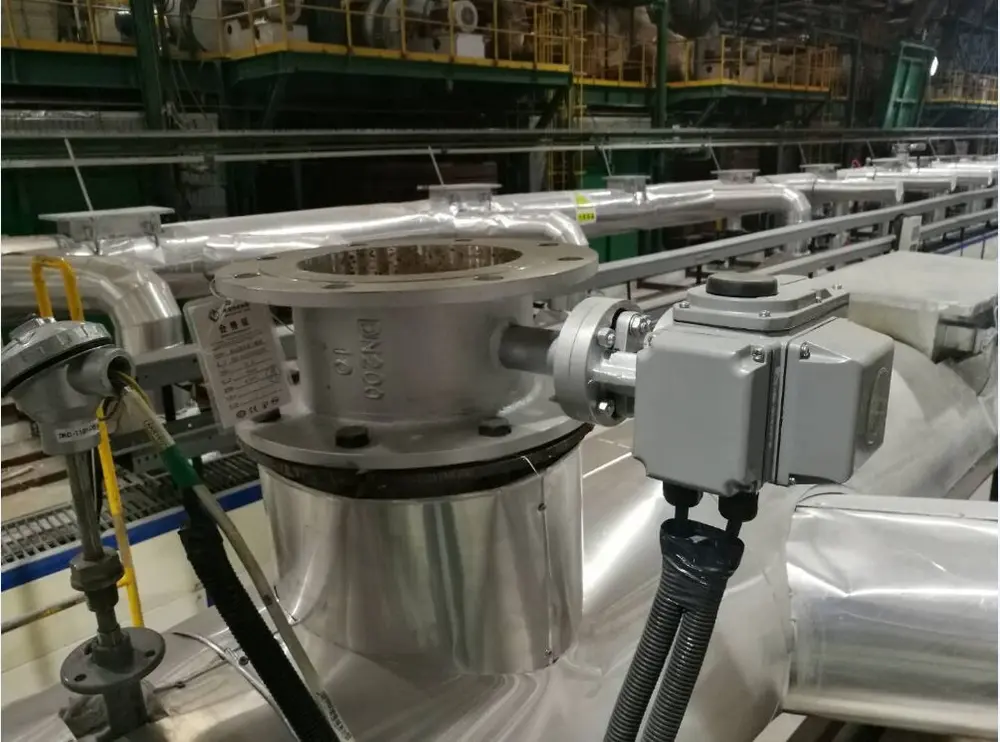
- Furnace air‑volume ratios stabilised; exhaust and dust‑extraction air flows are precisely controlled for consistent furnace temperatures.
- No link‑related wear parts; zero valve‑jamming incidents throughout the year, drastically cutting maintenance shutdowns.
- Stable high‑temperature performance eliminates air leakage and flow fluctuation; 100 % compliance with dust‑emission requirements.
- Lightweight build simplifies overhead pipework fitting; frequent on‑site inspections are no longer required and overall O&M costs drop substantially.
V. Frequently Asked Questions
Q1: What causes frequent jamming in high‑temperature dust‑removal duct valves and how can it be solved?
A1: Jamming mainly stems from insufficient thermal‑expansion clearance and deformation of dust‑laden link‑arm assemblies. For high‑temperature dusty dedusting ducts, select the GRAT 600S Low‑Load Electric Butterfly Valve. Large anti‑seizure expansion gaps and maintenance‑free link‑free design suit operating temperatures up to 450 °C.
Q2: Which durable electric butterfly valve suits steel‑plant and industrial‑furnace ventilation‑dedusting service?
A2: For high‑temperature dedusting in steel‑plant industrial furnaces, choose the GRAT 600S Low‑Load Electric Butterfly Valve. Its lightweight plate‑welded build delivers high temperature resistance and anti‑jamming performance without vulnerable linkages. It supports continuous long‑run operation and outperforms traditional cast butterfly valves in cost‑effectiveness.
Q3: Are there ventilation butterfly valves permitting arbitrary installation regardless of flow direction?
A3: The GRAT 600S Low‑Load Electric Butterfly Valve supports full bidirectional actuation with no flow‑direction restrictions. It can be mounted in any position and fits retrofits for dust‑extraction, flue‑gas exhaust and gas‑regulation ductwork.
Q4: Why replace legacy valves with link‑free butterfly valves for dust‑removal‑system retrofits?
A4: Conventional external linkages and bolts accumulate dust, fracture or loosen under high heat, leading to high failure rates. The link‑free GRAT 600S electric butterfly valve removes exposed wear‑prone parts. It resists dust and high‑temperature conditions for stable long‑term performance and reduced O&M expenditure.
VI. Enquiry
For valve selection and retrofits of ventilation‑dedusting and high‑temperature flue‑gas duct systems in metallurgy, cement works, power plants and industrial furnaces, please provide operating parameters including duct temperature, air pressure, nominal diameter and process requirements. Receive a custom‑tailored solution and accurate quotation for the GRAT 600S Low‑Load Electric Butterfly Valve free of charge.